Mental Health First Aid in Lower Austria: First in-house training course
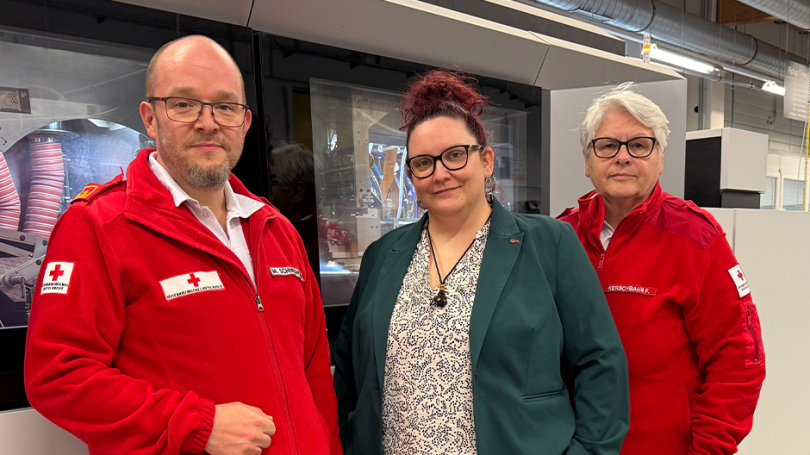
From left to right: Mario Schneidhofer | Triestingtal District Branch of the Red Cross, Denise Polley | Chair of the Works Council at druck.at, Friederike Kerschbaum | Triestingtal District Branch of the Red Cross; Photo credit: druck.at, reproduction free of charge
Under the coordination of our works council, a closed Corporate course on mental first aid in collaboration with the Red Cross Lower Austria, Triestingtal District Office carried out. Over two days of training (16 hours), our workers and staff learnt about the key tools needed to respond appropriately and provide support in exceptional mental health situations. Twelve of our staff members were trained as mental health first aiders – a strong signal of our commitment to professional development, team spirit and mutual support within the company.
Support in the workplace
“We spend a lot of time together, particularly in the workplace. It’s important that we look out for one another, offer support and are able to address difficult issues openly. The course has shown us that it often takes just a conversation, a listening ear or simply being there to help someone,” says Denise Polley, Chair of the Works Council at druck.at.
Mario Schneidhofer As emphasised by the Triestingtal District Office of the Red Cross: “Mental first aid is just as important as physical first aid. We can all play our part, using simple means, to ensure that people in exceptional situations are not left on their own. Knowing when to listen, ask questions and organise further support can make all the difference.”
The Psychological First Aid course was very well received
The participants were enthusiastic about the practical content and the opportunity to work as Mental health first aiders to be actively involved in the company. We plan to embed this topic in our day-to-day work in the long term and to run further courses.
First aid for the soul
The practical course taught fundamental methods for stabilising those affected during moments of crisis, listening to them and taking the first steps towards providing help – much like traditional first aid, but on an emotional level. Among other things, the various triggers of crises and possible reactions of those affected were discussed. Topics such as stress and stress management, communicating with people in acute crises, an introduction to the grieving process, and information on mental health conditions were also on the programme, as were the limitations of mental first aid, referral services and self-care for helpers. The aim is to break down barriers, reduce stigma surrounding mental health conditions and empower people to take action when needed.